Seoul Skin Guide independently selects every product. When you buy through our links — including Amazon — we may earn a small commission at no extra cost to you. Read our full disclosure.
PDO thread lift is one of the most requested non-surgical procedures in my Seoul clinic, and for good reason — it delivers a genuine lifting effect without the downtime of a surgical facelift. Patients often come in asking whether threads are “just filler with extra steps,” and the honest answer is no: the mechanism, the recovery, and the skincare that supports the results are entirely different. This guide breaks down how PDO threads actually work in the tissue, and the five products I recommend to patients before and after treatment to protect the skin and extend the results.

What Makes PDO Thread Lift Different From Fillers and Ultrasound Devices?
A PDO thread lift uses polydioxanone — a biodegradable suture material that has been used safely in surgery for decades — inserted into the subcutaneous layer with a fine cannula or needle. Unlike hyaluronic acid filler, which adds volume to a specific point, threads work mechanically: they are anchored beneath the skin and gently repositioned to lift sagging tissue along the jawline, cheeks, and brow. The immediate lift comes from this physical repositioning. The longer-term benefit comes from the body’s foreign-body response to the PDO material, which triggers a controlled inflammatory cascade and stimulates new collagen formation around each thread over the following two to three months.
This is what distinguishes threads from devices like Ultherapy or Thermage, which rely entirely on heat-induced collagen remodeling without any mechanical lift, and from filler, which does not address skin laxity at all. In my practice, I recommend threads for patients in their late thirties through fifties who have mild to moderate jowling or a softened jawline but are not yet candidates for surgical intervention. The procedure typically takes thirty to forty-five minutes under local anesthesia, with visible lifting immediately and full collagen benefits developing over three to six months. Results generally last twelve to eighteen months, depending on thread type and the patient’s skin quality going in — which is exactly why the skincare routine around the procedure matters as much as the technique itself.

1. Missha Time Revolution The First Treatment Essence 5X — Best for Post-Procedure Skin Vitality

Fermented skincare has a specific, well-documented role in post-procedure recovery, and Missha built this essence around exactly that principle. The formula uses Saccharomyces ferment filtrate — a byproduct of yeast fermentation rich in amino acids, minerals, and small-molecule peptides that penetrate efficiently and support the skin’s natural repair signaling. For thread-lift patients, this matters most in the first two weeks, when the treated tissue is undergoing active inflammation and needs ingredients that calm without interfering with the collagen response the threads are meant to trigger.
The texture is a thin, slightly tacky essence that patients apply by pressing into the skin rather than rubbing, which is precisely the application method I recommend around thread insertion points to avoid dislodging superficial threads in the first week. I have patients start this the evening after their procedure and continue it daily for at least six weeks. Beyond the post-procedure window, it functions as an excellent everyday firming essence for anyone maintaining results between thread sessions.
Missha Time Revolution The First Treatment Essence 5X — 150ml
Fermented Yeast Filtrate · Amino Acids · Post-Procedure Recovery + Firming
Buy on Amazon2. IOPE Retinol Expert 0.1% Anti-Aging Serum — Best for Long-Term Collagen Support

Retinol is not something I recommend immediately after a thread procedure — it needs to wait until the skin has finished its initial healing phase, typically two to three weeks out. But once cleared, it becomes one of the most important tools for extending thread-lift results, because retinoids directly upregulate the same fibroblast activity that the threads are mechanically stimulating. IOPE’s 0.1% formulation is encapsulated for controlled release, which reduces the irritation that often derails patients from consistent retinol use during a sensitive recovery period.
I recommend introducing it two to three times weekly at first, building to nightly use over four to six weeks. Patients who layer this consistently after thread placement report firmer, more even skin texture at the six-month mark compared to those relying on threads alone. It suits normal to combination skin best; those with compromised barriers should wait longer post-procedure and pair it with a stronger moisturizer underneath.
IOPE Retinol Expert 0.1% Anti-Aging Serum — 30ml
Encapsulated Retinol 0.1% · Collagen Stimulation · Fine Line Reduction
Buy on Amazon
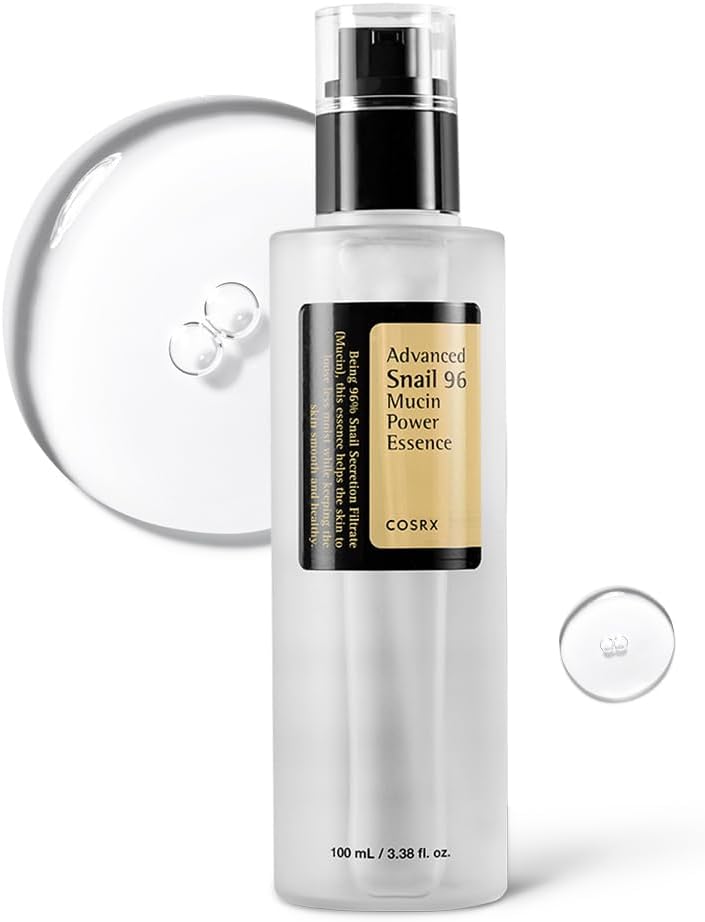
3. COSRX Snail Mucin Peptide Under Eye Cream — Best for Post-Thread Under-Eye Care

The under-eye and lower face are where thread-lift patients most often report residual puffiness and bruising in the first week, and this is the product I send patients home with most frequently. COSRX combined a high concentration of snail secretion filtrate with a five-peptide complex and niacinamide, targeting both the vascular fragility that causes bruising and the collagen support that keeps the thin under-eye skin resilient during the inflammatory phase of healing.
The cream has a light, slightly cushioned texture that patients tolerate well even directly adjacent to needle entry points, once any visible puncture marks have closed. I advise gentle patting application only — never dragging or massaging — for the first ten days after treatment. Used consistently beyond recovery, it also addresses the general under-eye laxity and fine lines that make patients seek thread lifting in the first place.
COSRX Snail Mucin Peptide Under Eye Cream — 0.84oz
Snail Mucin 73.7% · 5x Peptide Complex · Niacinamide · Bruise + Puffiness Support
Buy on Amazon4. Beauty of Joseon Revive Serum: Ginseng + Snail Mucin — Best for Firming Support

Ginseng has a long history in Korean dermatology for its saponin content, which supports microcirculation and has measurable effects on skin firmness over sustained use. Beauty of Joseon pairs it with snail mucin and a peptide complex in a formula that is deliberately gentle — free of fragrance and unnecessary actives — making it appropriate for the sensitive skin window that follows any injectable or thread-based procedure.
The consistency is a light, slightly sticky serum that absorbs within a minute and layers cleanly under heavier creams. I recommend it as a daily maintenance step for patients who have completed their initial recovery and are now in the months-long window where collagen remodeling around the threads continues. It is also one of the more affordable options on this list, which makes it practical for the twice-daily, months-long commitment that real firming results require.
Beauty of Joseon Revive Serum: Ginseng + Snail Mucin — 30ml
Ginseng Saponins · Snail Mucin · Peptide Complex · Daily Firming Maintenance
Buy on Amazon5. Klairs Midnight Blue Youth Activating Drop — Best for Growth-Factor Recovery

Growth factors are the topical ingredient category that most directly parallels what PDO threads accomplish biologically. Klairs formulated this drop with EGF and FGF at 10ppm each, plus guaiazulene from chamomile distillate for its anti-inflammatory effect. For patients who want to support fibroblast activity between thread sessions, or who are not ready for an in-clinic procedure but want a topical approach with a similar mechanism, this is the most mechanistically relevant product available without a prescription.
A single drop covers the full face; the concentrated, slightly viscous texture makes overuse counterproductive and unnecessary. I recommend evening application, both because growth factors benefit from the skin’s overnight repair cycle and because the blue pigment can leave a faint tint in daylight on fair skin. Patients maintaining thread-lift results long-term often rotate this in during the months between touch-up sessions, when the skin benefits from an extra regenerative signal.
Klairs Midnight Blue Youth Activating Drop — 20ml
EGF 10ppm · FGF 10ppm · Guaiazulene · Fibroblast-Supporting Repair
Buy on Amazon
How to Choose Between Threads, Devices, and a Home Routine
The right approach depends primarily on the degree of laxity and your tolerance for downtime. Mild sagging with good skin elasticity often responds well to a home routine built around retinoids, peptides, and growth-factor serums alone, with results visible over three to six months of consistent use. Moderate jowling or jawline softening, especially in patients over forty, is where PDO threads offer the clearest advantage — a mechanical lift that topical products cannot replicate, combined with the collagen stimulation that supports longer-term improvement. Device-based options like Ultherapy sit between these two, offering collagen stimulation without any mechanical repositioning, which makes them better suited to prevention than to correcting visible sagging. In my clinic, the patients who see the best long-term outcomes are the ones who pair whichever in-clinic option they choose with a disciplined topical routine — the products support and extend what the procedure achieves, rather than replacing it.
Frequently Asked Questions
How long does a PDO thread lift actually last?
Most patients see visible lifting effects for twelve to eighteen months, though this varies based on thread type, the number of threads placed, and individual collagen response. Molded or barbed threads tend to hold slightly longer than smooth mono threads. Many patients choose to repeat the procedure annually to maintain consistent results rather than waiting for a full reversal.
Is PDO thread lift painful, and what is the downtime?
The procedure is performed under local anesthesia, so discomfort during insertion is minimal. Most patients experience mild swelling, tightness, and occasional bruising for three to seven days. Full activity can typically resume within a day or two, though I advise avoiding intense facial massage, saunas, and dental work for at least two weeks to protect thread positioning.
Can PDO threads be combined with other treatments like filler or Botox?
Yes, and this combination is common in Seoul clinics. Threads address structural sagging, filler restores lost volume, and neuromodulators soften dynamic wrinkles — each targets a different mechanism of aging. I typically space these treatments two to four weeks apart to allow proper healing assessment between procedures rather than combining everything in a single session.
Who should avoid PDO thread lift treatments?
Patients with active skin infections, keloid-prone scarring tendencies, autoimmune conditions affecting wound healing, or unrealistic expectations about the degree of lift achievable are generally not good candidates. Pregnant or breastfeeding patients should also wait. A proper consultation with a board-certified dermatologist or plastic surgeon should always precede the procedure to assess candidacy individually.

Related Reading
- RF Microneedling Guide: Korea’s Secret RF Treatment for Pores, Scars & Texture Explained
- Best Korean Skincare for Mature Skin Over 40 in 2026: A Seoul Dermatologist’s Top 5 Picks
- Best Korean Eye Creams 2026: For Puffiness & Dark Circles
Final Thoughts
PDO thread lift occupies a genuinely useful middle ground between topical skincare and surgical facelifting — a real mechanical lift with real collagen stimulation, achieved without a scalpel. But no procedure works in isolation from the skin it is performed on. The five products in this guide are the ones I most consistently recommend to patients moving through the pre-procedure, recovery, and long-term maintenance phases, chosen specifically for how their mechanisms complement what threads are doing beneath the surface. Whether you are actively considering treatment or simply building a firming routine to delay the need for it, consistency over months — not any single product or single procedure — is what determines the outcome you actually see in the mirror.